
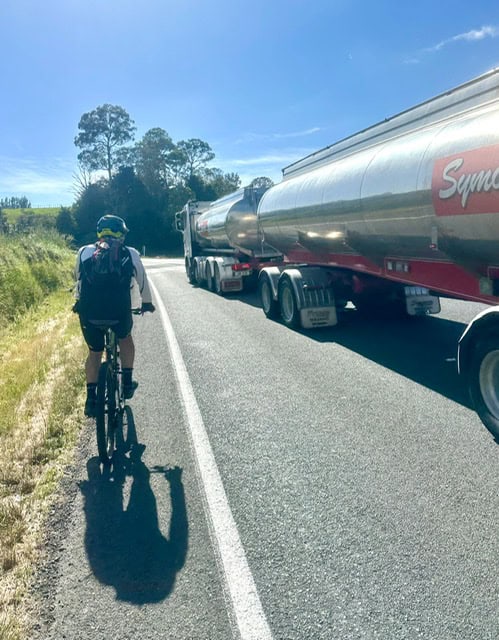
A truck has several blind spots especially if it has a trailer. Cyclists and pedestrians may often be caught in the most obvious blind spot, to the left and slightly behind the cab on the passenger side.
This blog offers some insights for both truck drivers and cyclists so they can understand the limitations of each and help promote safer journeys for everyone.
Obviously trucks and bikes are vastly different vehicles. A cyclist is exposed with little protection and a truck has a lot. Many New Zealand websites offer advice on road safety, truck blind spots and sharing the road.
Where are a truck’s blind spots?
(Information from DT training.)
There is no rearview mirror on a truck, so the driver cannot see immediately behind or between the truck and trailer, if there is a trailer. On the passenger side of the cab, the blind spot is the area not covered by the side mirror and often where a cyclist or pedestrian is when both are stopped at an intersection. The cyclist in the far left, the pedestrian on the footpath. In front of the cab there’s a blind spot where the driver can’t see what’s below. A pedestrian, for example, on a crossing.
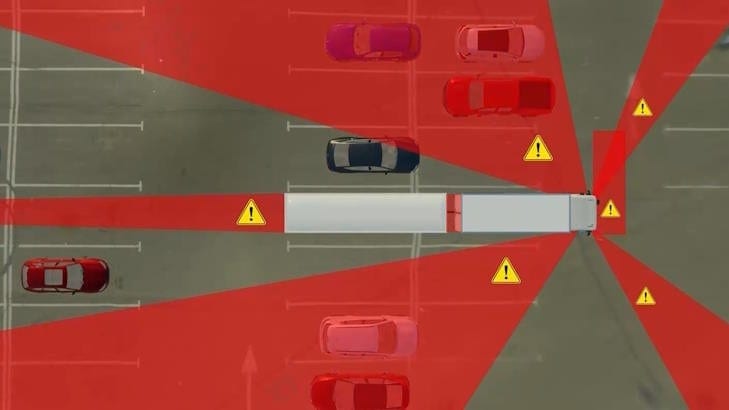
What cyclists need to know about trucks and buses too
Truck drivers manage large vehicles and cyclists should be aware of the blind spots above. As a rule of thumb, if a cyclist can’t see the truck driver’s mirrors, the driver probably can’t see them.
Wearing high visibility clothing, using lights, even in daylight, and moving through the blind spot areas quickly or, if possible, avoiding them by stopping earlier, is crucial for safe riding by the cyclist. Cyclists must ride in single file, even on rural roads. Riding two or more abreast takes up most of the lane, making it difficult to pass safely.
Trucks take time and more space to stop and turn and the cyclist should be aware that a truck may need to swing out before making its turn. Cyclists should never pass a turning vehicle, especially a truck or bus.
Cyclists may feel silly using hand signals but the truck driver, bus driver and other vehicle drivers find these useful to know where a cyclist intends to go.
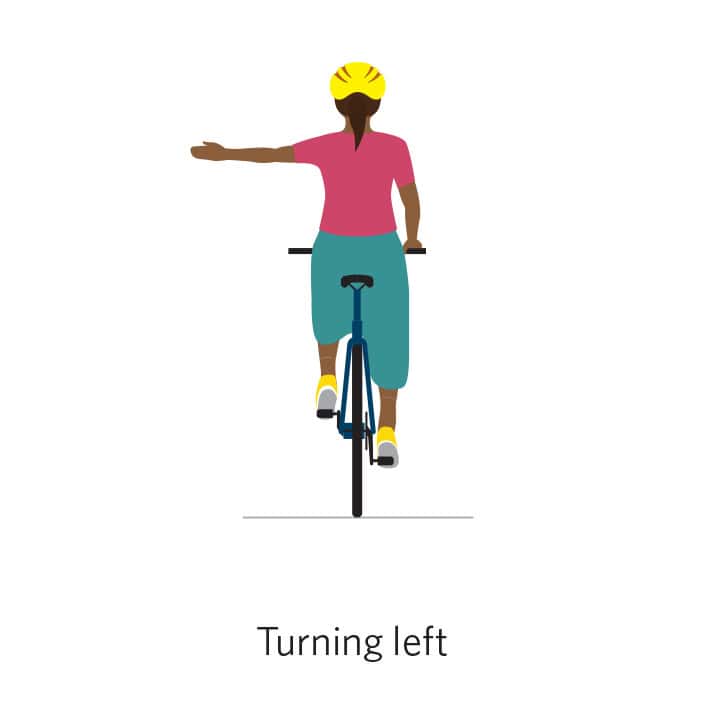
Illustration credit: NZ Transport Agency/Waka Kotahi
What truck drivers need to know about cyclists
The first is vulnerability. A cyclist will definitely come off worse in any accident with a vehicle or caused by a vehicle.
Leaving 1.5 metres distance between the bike and the truck when passing a cyclist is not only good manners, it’s vital. Any closer and the cyclist may get a fright, causing them to veer or wobble. Truck drivers also need to be aware of down draught. As they pass a cyclist, on either side of the road, the draught created, especially if the truck is going fast, can cause the cyclist again to wobble.
A truck driver should not expect a cyclist to dismount. Cyclists often wear clip-in shoes, meaning the shoe and the pedal are joined (this makes cycling easier and uses less energy) but takes more effort to get off the bike quickly. Plus, if the cyclist has momentum it takes more energy to dismount and start off again.
Before passing a cyclist the truck driver should wait until oncoming traffic has gone by. If the truck driver passes with oncoming traffic, this will squeeze the cyclist and often give them nowhere to go. The truck driver should also reduce speed when passing a cyclist especially on narrow roads. Fast passing creates more down draught, as above.
With dedicated cycling lanes the truck driver should ensure they don’t encroach into these.
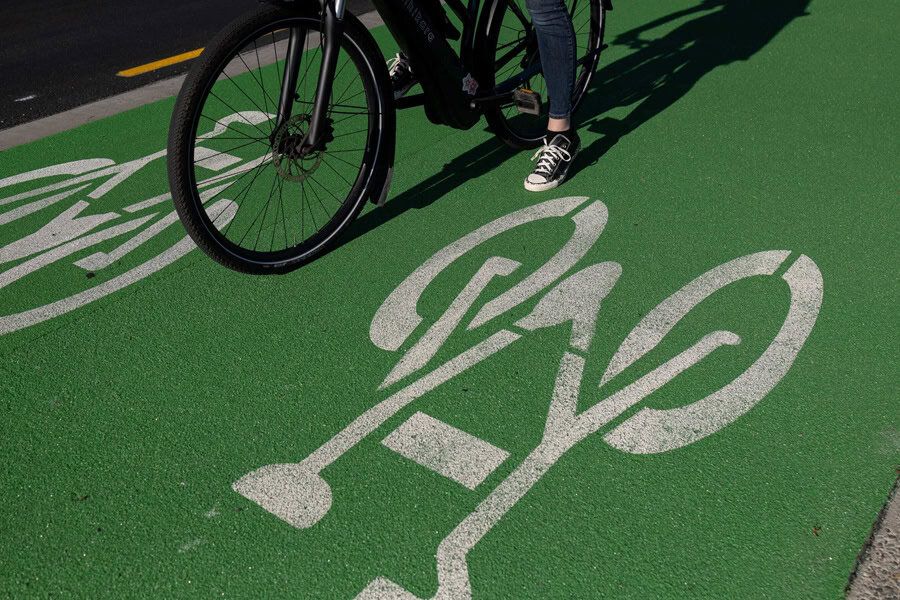
Photo credit: Island Bay Cycleway
The truck driver should also be aware of dangers on the road that a cyclist may react to. Potholes, people opening car doors, debris on the road. Providing ample space as they go around the cyclist.
Both cyclists and truck drivers should consider each other, be patient and look for ways to promote safe usage for everyone on the road. Regular maintenance is also essential for safe journeys. Check out our blog on helpful pre-travel checks for trucks.